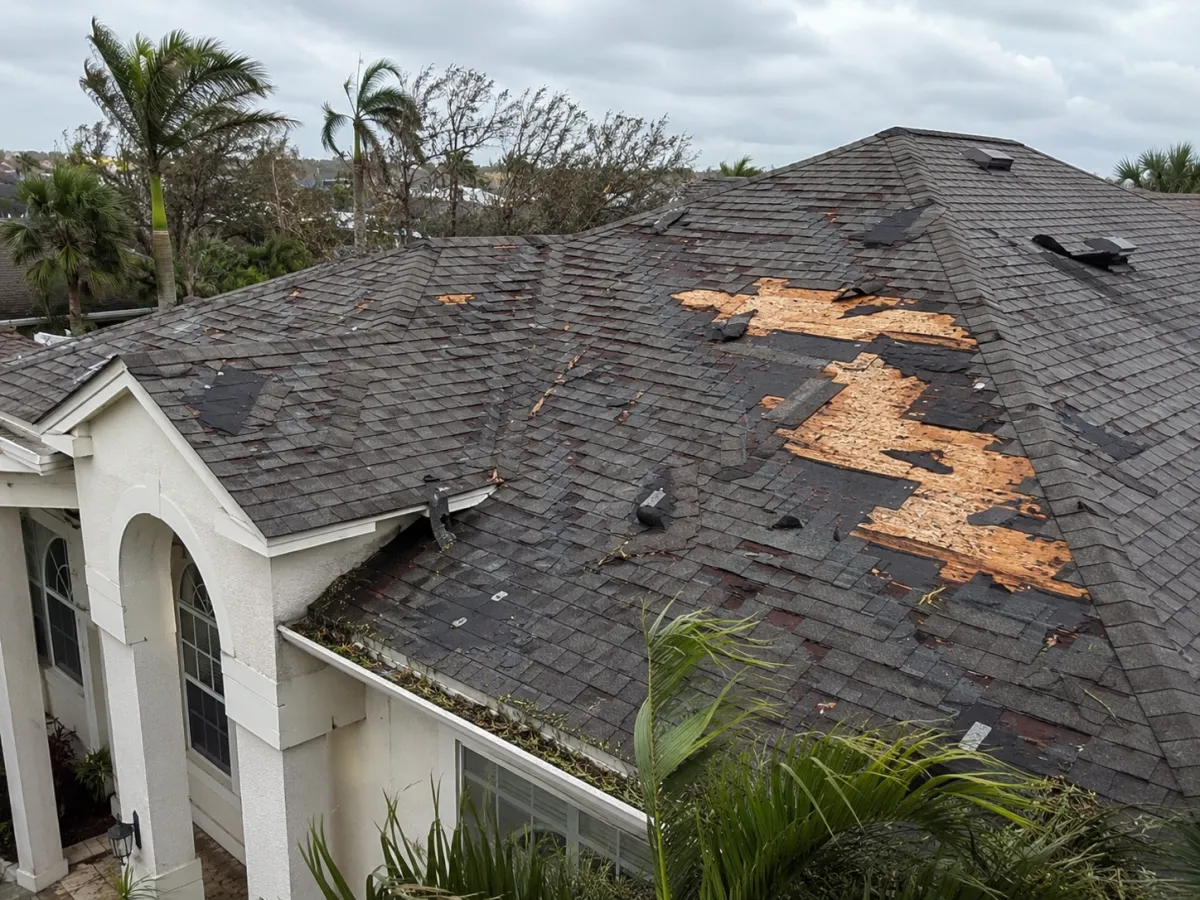
The First 48 Hours After Storm Damage to Your Roof: A Homeowner Playbook for Brevard County Residents
The First 48 Hours After Storm Damage to Your Roof: A Homeowner Playbook for Brevard County Residents
A storm clears Brevard County and you are standing in the yard looking up at missing shingles or a wet ceiling. What you do in the next two days decides two things: how much more damage your house takes, and how much of the repair your insurer actually pays for. Both are on a clock.
This is the sequence. Run it in order.
Hour 0: Make Sure It Is Safe Before You Do Anything
Wait until the weather has fully passed. Stay away from downed power lines, leaning trees, and standing water that could be energized. Do not climb onto a wet or damaged roof to inspect it yourself. A roof that lost shingles may also have compromised decking that will not hold your weight.
You can document almost everything you need from the ground and from inside the house. Leave the climbing to a licensed roofer with fall protection.
Hours 0 to 4: Document Everything Before You Touch It
Insurers pay claims on evidence. The strongest evidence is the condition of the property immediately after the loss, before any cleanup or temporary repair changes what it looks like.
Photograph the damage in two passes. Take wide shots that show the whole roof slope or the whole affected room, then close-ups of specific damage: lifted or missing shingles, dents, punctures, water stains on ceilings and walls, and any debris that came through. Shoot video walking the perimeter of the house and through every affected room. If water is actively coming in, film it coming in.
Write down the date. For a named storm, your insurer treats the date of loss as the day the storm hit, not the day you noticed the damage. That date starts every deadline that follows, so get it right.
Hours 0 to 12: Stop the Water, and Keep the Receipts
Here is the part most homeowners get wrong, and it costs them money.
Under Florida law and under virtually every homeowners policy, you have a duty to mitigate. That means you are required to take reasonable steps to prevent further damage after a covered loss. If you leave a roof opening exposed and water keeps pouring in for a week, your insurer can deny the part of the damage you could have prevented.
The flip side is the good news: the reasonable cost of those emergency steps is typically reimbursable. Emergency roof tarping qualifies. So does the plywood, the buckets, the contractor's emergency visit. Keep every receipt. Tarps, fasteners, a roofer's emergency tarp invoice, water mitigation fees, all of it.
Inside the house, contain active drips with buckets and move or cover furniture and electronics. Do not poke holes in a sagging ceiling unless you know what is above it and you are draining a trapped pocket of water on purpose.
An unprotected roof opening, even a small one, can saturate insulation, rot decking, and start mold growth within 24 to 48 hours. That is the whole reason this window matters. Tarp first, then deal with the rest.
Hours 12 to 48: Get a Licensed Roofer on the Roof
Call a local licensed roofer for a full inspection and proper temporary protection. Two reasons this beats waiting.
First, a roofer sees damage you cannot see from the ground: bruised or fractured shingles, displaced flashing, lifted edges, and decking that is soft but not yet leaking. That damage is real and it is part of your claim whether or not water has found it yet.
Second, a roofer's written statement carries weight with your insurer. Ask the roofer to document the condition of the roof when they arrived, the temporary work they performed, and why it was necessary to prevent further damage. When an adjuster later argues that your emergency repairs were excessive or unnecessary, that statement is what answers them.
Verify the contractor is licensed before you let anyone on your roof. Storms bring out-of-state crews and unlicensed operators into Brevard fast. A Florida roofing license is checkable. Use it.
The Deadlines You Are Now On
Florida cut its claim filing windows in 2022 under Senate Bill 2-A. The numbers that apply now:
You have one year from the date of loss to give your insurer notice of a new claim. Miss it and the claim is barred no matter how valid the damage. For a hurricane, that one-year clock starts the day the storm hit.
If you later find additional damage from the same storm after your claim is adjusted, you have 18 months from the date of loss to file that supplemental claim.
One year sounds like plenty until a busy season backs up adjusters and contractors for months. File early. The homeowners who get paid cleanly are the ones who documented on day one and filed well inside the window.
Where This Sits in the 2026 Season
NOAA's outlook for the 2026 Atlantic season, which runs June 1 to November 30, calls for a below-normal year: 8 to 14 named storms, 3 to 6 of them hurricanes, and 1 to 3 major hurricanes. El Nino conditions are expected to develop and hold activity down.
Below-normal is not zero. One storm over Brevard does the same damage to your roof whether the season total is 8 or 28. A quiet forecast is a reason to get your documentation habits set now, while you have time, not a reason to skip them.
Your 48-Hour Checklist
Confirm it is safe. No downed lines, no climbing a wet or damaged roof.
Photograph and video everything, wide and close, inside and out, before cleanup.
Record the date of loss. For a named storm, that is the day it hit.
Stop the water. Tarp the roof, contain interior drips, and keep every receipt.
Get a licensed roofer to inspect and document the damage and the temporary work.
File your claim early, well inside the one-year window.
When You Are Ready to Fix It Right
Temporary protection buys you time. It does not fix the roof. Once the water is stopped and the claim is moving, you need a permanent repair or replacement done to current Florida code so the next storm does not reopen the same hole.
Local Roofing Experts handles storm damage repair and full replacement across Brevard County: Rockledge, Cocoa, Merritt Island, Titusville, Melbourne, and surrounding cities. We will inspect the roof, give you the documentation your insurer needs, and lay out repair and replacement options including financing if you need it.
Call us at (321) 487-5424. License #CCC1335645.