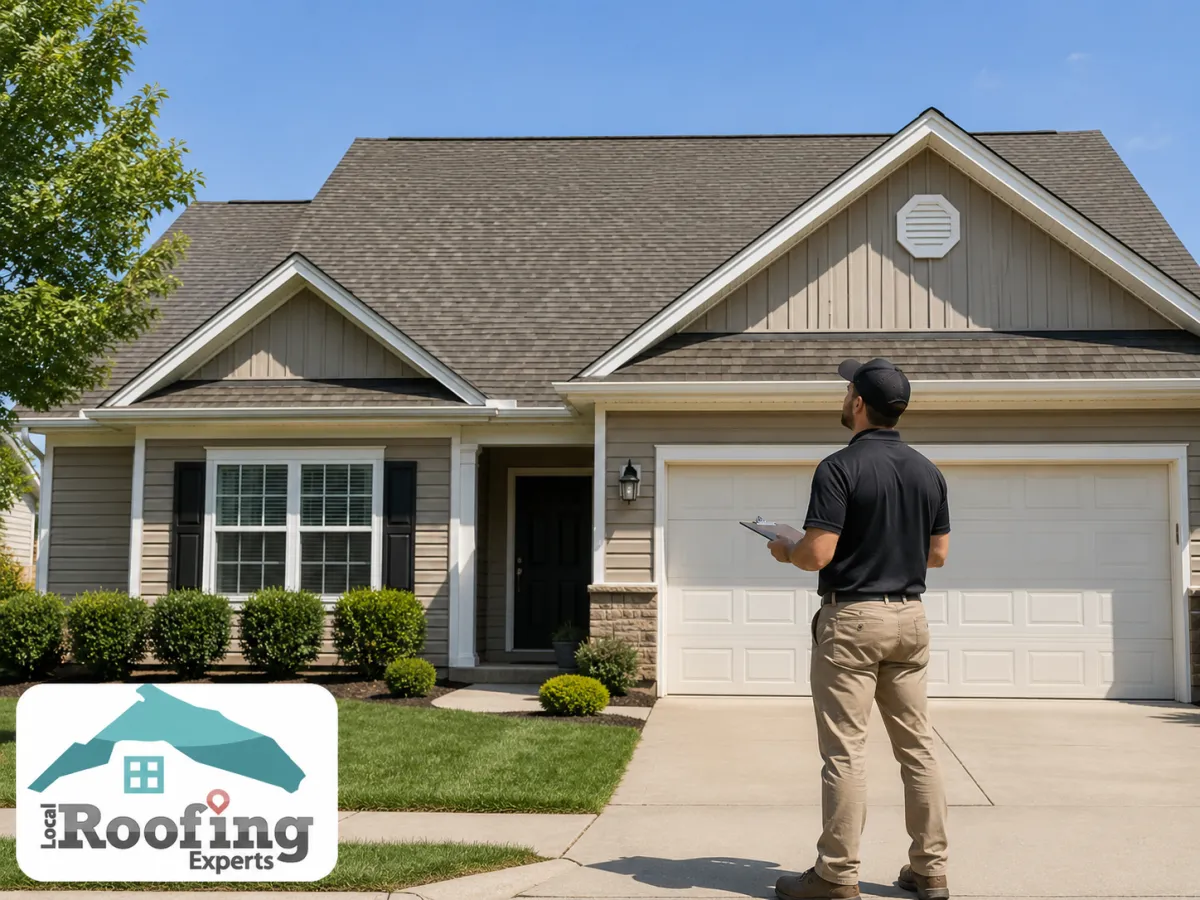
Roof Inspections in Brevard County
Roof Inspections in Brevard County: What Inspectors Check and What Failing One Costs You
Your roof gets inspected whether you schedule it or not. Insurers order inspections when you apply for coverage, when you renew, and increasingly from the air without telling you first. Each inspection has different rules, checks different things, and carries a different price for failing. The differences tend to surface only when a letter arrives demanding a new roof as a condition of keeping a policy.
Here are the four inspections your roof will face, what each one checks, and where you have leverage.
The 4-Point Inspection: The Gatekeeper at 20 Years
If your home is more than 20 years old and you apply to Citizens Property Insurance, a 4-point inspection is mandatory. A Florida-licensed inspector checks four systems: electrical, plumbing, HVAC, and roof. For the roof, the inspector must document its age, type, and condition. Citizens' rules are the publicly documented baseline; ask any private carrier what inspection requirements apply to your application.
The part that catches homeowners off guard: Citizens says serious hazards or deficiencies, including active leaks or evidence of leaks, should be repaired before the application is even submitted. That means an old stain from a long-fixed leak is worth addressing before the inspector arrives, and having the repair records on hand can only help. The 4-point is not a negotiation. It is a photograph of your home's condition on one specific day, and the roof section is the one where Citizens spells out hard age and remaining-life requirements.
The Roof Age Rules: 25 Years for Shingle, 50 for Metal and Tile
Citizens draws a second line based on the roof itself. A soft roof (shingle or similar) older than 25 years, or a hard roof (tile, slate, clay, concrete, or metal) older than 50, requires documentation showing at least five years of remaining useful life. A Florida-licensed inspector examines the roof for visible damage or deterioration and completes a Roof Inspection Form. If the inspector finds less than five years of useful life remaining, Citizens will not write the policy until you show proof of a full roof replacement.
Note the two-to-one spread between those age lines. A metal roof does not hit Citizens' remaining-useful-life documentation threshold until 50 years, versus 25 for shingle. That gap belongs in the math on any replacement decision in Brevard, where salt air already shortens shingle life near the coast.
Your Rights at 15 Years Under Florida Statute 627.7011(5)
Florida Statute 627.7011(5) sets rules that apply to homeowners policies statewide, not just Citizens.
First, if your roof is less than 15 years old, an insurer cannot refuse to issue or renew your policy solely because of the roof's age.
Second, once your roof hits 15 years, the insurer must allow you an inspection, at your expense, before it can require replacement as a condition of issuing or renewing. If that inspection shows five years or more of useful life remaining, the insurer cannot refuse to issue or renew solely because of roof age. The key word is solely: an insurer can still act on documented condition problems, just not on age alone.
Third, the statute defines who counts as an authorized inspector, and the categories include licensed roofing contractors, along with home inspectors, building code inspectors, general contractors, engineers, and architects. The inspector must also be approved by your insurer, so confirm approval before you hire anyone. You arrange and pay for the inspection yourself, which means the report enters your file on your initiative, not the underwriter's.
One more detail worth knowing: the statute says a roof's age runs from the last date 100 percent of its surface was built or replaced. If you replaced half the roof after a storm and the other half three years later, the clock started at the first partial replacement, not the second. Pull your permit history before you assume your roof's official age.
The Inspection You Never Scheduled
Citizens reserves the right to send a third-party field surveyor to any insured property, at no cost to you, to check condition and eligibility. Exterior surveys cover the dwelling, outbuildings, and roof without entering the home. Citizens can require you to repair hazards the survey finds.
Private carriers increasingly skip the driveway entirely. Aerial imagery has become a standard underwriting tool, and homeowners around the country have received notices about roof condition based on photos taken from above, before any inspector touched the property. Visible roof wear can show up in those images before any inspector visits. If your roof looks rough from above, assume your carrier has seen it.
The One Inspection That Pays You: Wind Mitigation
Not every inspection is a threat. A wind mitigation inspection documents the construction features that help your roof survive a storm and translates them into premium discounts. Florida rolled out an updated wind mitigation form in April 2026, the first revision in over a decade, so a fresh inspection also means your file reflects the current form. If you have replaced your roof since your last wind mitigation report, a new inspection is how those upgrades get into your premium calculation.
What Failing Actually Costs
A failed 4-point or roof inspection does not fine you. It does something more expensive: it converts your roof from an asset into a coverage condition. The typical sequence is a letter requiring replacement before issue or renewal, a deadline, and a scramble to finance a roof on the insurer's clock instead of yours. During hurricane season, which runs through November 30, that scramble competes with every storm-damage job in the county.
The homeowners who avoid the scramble are the ones who knew their roof's condition before the insurer did. That means a documented inspection on your terms, repairs made while they are still repairs, and a paper trail that answers the underwriter's questions before they are asked. If replacement is genuinely coming, finding out on your own schedule lets you plan the spend (see our financing options) instead of absorbing it as an emergency.
Get Ahead of the Letter
Local Roofing Experts is a licensed Brevard County roofing contractor, one of the professional categories Florida's roof age statute recognizes for these inspections (your insurer's approval is the other half; confirm it before scheduling). We inspect roofs in Rockledge, Cocoa, Merritt Island, Titusville, Melbourne, and across Brevard County, document what we find, and give you a direct answer on the condition of your roof. If it needs work, we fix it. If it does not, you get a written condition report you can put in front of your insurer. Coverage decisions are always the insurer's to make; what we control is whether your file shows a documented, maintained roof.
Call (321) 487-5424 before the inspection letter shows up. License #CCC1335645.