9 Signs You Need a New Roof in Brevard County, FL
9 Signs You Need a New Roof in Brevard County, Florida
Living in Brevard County means your roof works harder than most. Intense UV, summer thunderstorms, salt air along the coast, and a hurricane season that runs from June through November all pull years off a roof's expected lifespan. A shingle roof rated for 25 years in a cooler climate often gives you closer to 15 here in Florida.
The hard part is knowing when a roof has crossed the line from "needs a repair" to "needs replacement." Patching a roof that's at the end of its life is throwing money at a problem that's only going to come back, often worse, and usually right before a storm. Here are nine signs your Brevard County home needs more than a patch job.
1. Your roof is 15 or more years old
For asphalt shingles, the Florida climate compresses the standard 20 to 30 year lifespan. UV breaks down the asphalt binder, daily temperature swings expand and contract the materials, and humidity feeds algae growth. By year 15, even a roof that looks fine from the curb is often near the end of its useful life.
Tile and metal last longer (25 to 50 years for tile, 40 plus for metal), but the underlayment beneath them typically gives out around 20 to 25 years. If you have an older tile or metal roof, the underlayment is the part to watch.
One more reason this matters in Florida: most homeowner insurance carriers are no longer writing or renewing policies on roofs older than 15 to 20 years, regardless of how the roof looks. If your renewal is coming up and your roof is aging, expect questions.
2. Curling, cracking, or buckling shingles
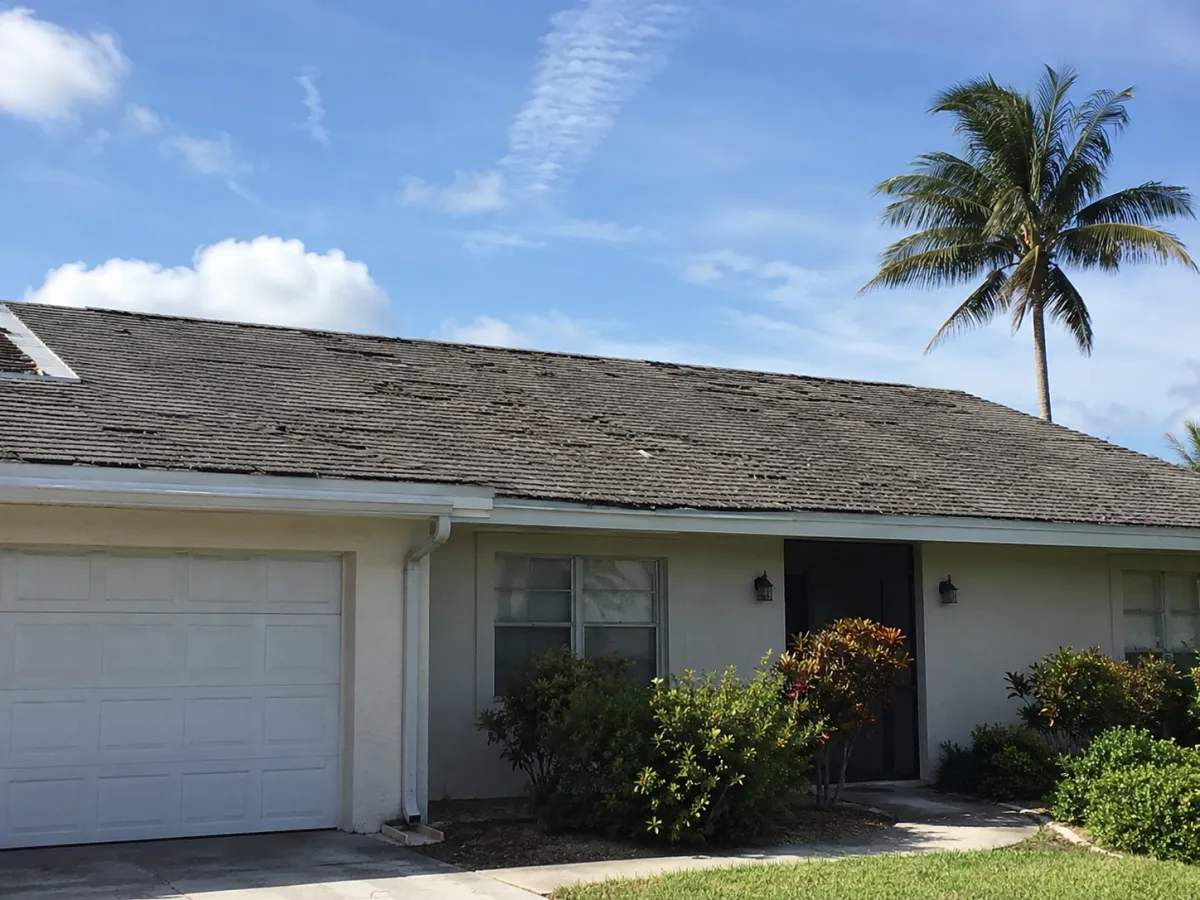
Walk around the perimeter of your house and look up. Healthy shingles lay flat. Shingles that are curling at the edges, cracking down the middle, or buckling in waves have lost their flexibility. That's UV damage and heat cycling, and once it's widespread across the roof, individual repairs won't catch up.
A few damaged shingles in one spot is a repair. Curling across an entire slope is a replacement.
3. Shingle granules in your gutters or downspouts
Asphalt shingles are coated with mineral granules that protect the asphalt layer from UV. When those granules wash off, the asphalt is exposed and the shingle deteriorates fast.
Check your gutters and the splash zone under your downspouts. A heavy layer of what looks like coarse black sand means your shingles are shedding. Some granule loss is normal during the first year of a new roof. Significant ongoing loss on an older roof is a warning sign.
4. Daylight or water stains in your attic
This one takes a flashlight and ten minutes. Go into your attic during the day and turn off your light. If you see daylight coming through the roof deck, you have a problem. Same goes for staining on the wood, soft or spongy decking, or any visible moisture.
Even small leaks rot the wood deck over time, and a rotted deck means a full tear-off when you do replace, not just a re-shingle. The longer you wait, the more expensive the job gets.
5. A sagging roofline
Stand across the street and look at your roof against the sky. The lines should be straight. Any visible dip, wave, or sag in the ridge or along the slopes means the structural decking or trusses underneath are failing, often from long-term moisture damage.
A sagging roof is not a wait-and-see issue. It's a structural problem that gets worse with every storm.
6. Water stains on interior ceilings or walls
By the time you see a stain on your ceiling, water has been getting in for a while. The leak is rarely directly above the stain (water travels along rafters and decking before it drops), which means tracking the source is a job for someone who knows what to look for.
If you see one stain, assume there are other places water is getting in that haven't shown up yet.
7. Algae streaks, moss, or mildew
Those dark vertical streaks on Florida roofs aren't dirt. They're algae, specifically Gloeocapsa magma, which thrives in our humidity. Algae alone won't destroy a roof, but it holds moisture against the shingles, accelerates granule loss, and is often a sign that the roof is no longer shedding water cleanly.
Moss is worse. Moss roots lift shingles and let water underneath them. If you're seeing actual moss growth in shaded areas, the roof is holding too much moisture for too long.
8. Missing or displaced shingles after a storm
Brevard sees enough wind in any given year to test a roof. After a tropical storm, a strong thunderstorm cell, or a hurricane, walk the perimeter and look for shingles in the yard or visibly missing from the roof.
A few missing shingles in one area can be repaired. Widespread loss, especially after the kind of wind events we see during hurricane season, usually points to a roof that no longer has the adhesion to stay together.
If a storm has clearly damaged your roof, document it with photos right away and call a licensed roofer before the next event makes the damage harder to attribute.
9. Your insurance carrier is asking questions
Florida's insurance market has changed sharply in the last few years. Carriers now routinely require roof inspections at renewal, refuse to write policies on older roofs, and apply roof-deductible schedules that put more of the cost on the homeowner.
If your carrier has sent you a non-renewal notice, asked for a roof inspection report, or quoted you a sharp premium increase, your roof's age and condition are likely the reason. Replacing the roof is often what gets coverage back to a normal level.
What makes Brevard County roofs age faster
Three things hit Brevard roofs harder than they hit roofs elsewhere.
UV exposure. Florida sunshine is relentless, and it breaks down asphalt binders, sealants, and underlayment faster than in cooler climates.
Storm cycling. Even outside named hurricanes, the daily summer thunderstorms drive water against the roof, test every flashing and seam, and pull at any shingle that isn't fully sealed.
Coastal salt air. If you're in Cocoa Beach, Merritt Island, Satellite Beach, or any other coastal area, salt accelerates corrosion on metal flashings, fasteners, and exposed metal components. Even an inland roof in Brevard sees more salt than most of the state.
What to do next
If you've spotted two or more of these signs on your roof, the next step is a professional inspection. A licensed roofer can tell you whether you're looking at a repair, a partial replacement, or a full re-roof, and they can document everything for your insurance carrier if that becomes relevant.
Local Roofing Experts offers free inspections across Brevard County, including Rockledge, Cocoa, Merritt Island, Titusville, and Melbourne. We give you a straight answer, in writing, with no pressure to replace something that doesn't need replacing.
Call (321) 487-5424 or request a free quote to schedule yours.